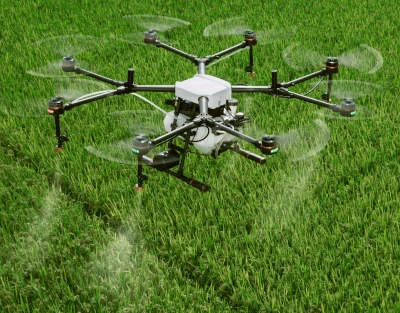
Polymer 3D printing and vacuum casting have fundamentally changed what is achievable in drone engineering. From structural frames to mission-specific payloads, additive manufacturing addresses core challenges around weight, geometry, iteration speed, and unit economics — challenges that traditional subtractive methods struggle to solve efficiently. Here are fifteen areas where these technologies make the clearest engineering impact.
Aluminium frames have long been the default for their stiffness-to-weight ratio, but engineering-grade polymers such as PEEK and Ultem are increasingly competitive. These materials enable complex aerodynamic geometries at a fraction of the cost of metal additive manufacturing — improving payload capacity without sacrificing structural integrity.

Propeller geometry has a direct and measurable impact on thrust, efficiency, and acoustic signature. 3D printing allows engineers to iterate rapidly on blade profiles, pitch angles, and tip geometry. This shortens the development cycle for noise-optimised and high-efficiency propellers in a way that injection moulding timelines simply cannot support.
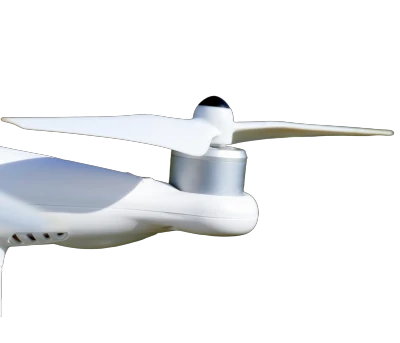
Landing gear, camera mounts, and battery compartments are revised multiple times before a design is locked. Additive manufacturing makes each revision low-cost and fast. Engineers can test fit, function, and load-bearing performance across several generations of a component in the time it would take to tool a single injection-moulded part.
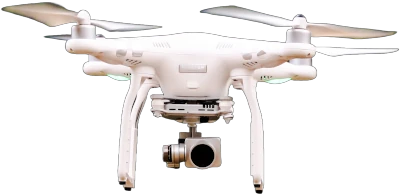
Maintaining physical inventory of every drone component across a product lifecycle is costly and operationally complex. 3D printing enables an on-demand spares model, where parts are produced only when required. This reduces warehouse burden, eliminates minimum order quantities, and supports field operations in remote or time-critical environments.
Modern drones carry increasingly sophisticated sensor arrays — cameras, LiDAR, GPS modules, and inertial measurement units. Each requires a housing engineered for electromagnetic compatibility, vibration isolation, and environmental ingress protection. 3D printing enables tight, custom-fit enclosures that would be uneconomical to machine or tool in small quantities.
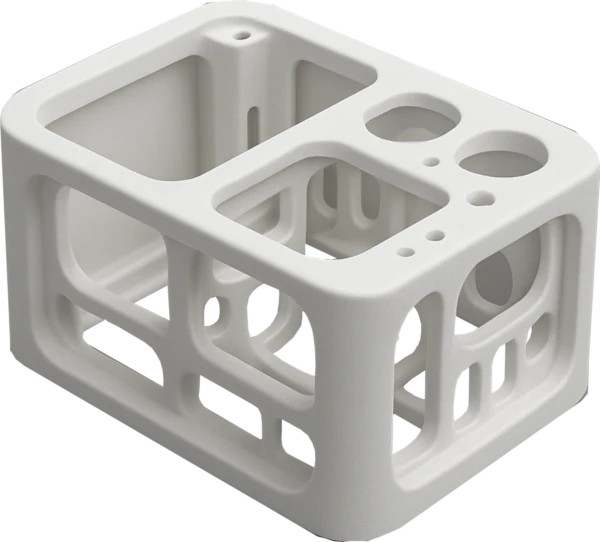
© Stratnel | AI Render
Antenna position, orientation, and proximity to carbon fibre or metallic structures directly affects signal quality. Custom-designed 3D printed mounts allow engineers to optimise placement for both communication and navigation systems, reducing interference and improving link reliability — a critical parameter in beyond-visual-line-of-sight operations.
The ability to 3D print a functional prototype within hours of completing a CAD model compresses the validation cycle dramatically. More iterations in less time means designs are better tested before tooling investment is made. For drone manufacturers in competitive markets, this acceleration in design integrity is a meaningful strategic advantage.
Ducted fans offer thrust efficiency and safety benefits over open rotors, but their internal geometry — including inlet profiles, stator vanes, and outlet nozzles — is difficult to produce with conventional methods. Polymer 3D printing handles this complexity natively, enabling engineers to prototype and refine duct designs with detail that machining cannot readily achieve.
Swarm applications demand identical performance across every unit in the fleet. Vacuum casting is particularly well-suited here — producing runs of identical polymer parts with tight dimensional consistency and repeatable mechanical properties. Once a master pattern is validated, vacuum casting scales economically to the volumes that swarm deployment typically requires.
Drones used for atmospheric sampling, water quality assessment, or pollution mapping often carry bespoke collection devices with no off-the-shelf equivalent. Additive manufacturing allows these instruments to be designed, fabricated, and field-tested within days — enabling research teams to deploy purpose-built systems with minimal lead time.
Precision agriculture drones require specialised nozzles, spray booms, and payload interfaces that must conform to specific crop types, chemical formulations, and regulatory requirements. These components vary by application and geography. 3D printing makes it feasible to produce small batches of application-specific hardware without the cost overhead of dedicated tooling.
No two search and rescue operations are identical. Drones deployed in these scenarios may need to carry thermal imagers, speakers, drop mechanisms, or rope dispensers — configured differently per mission. 3D printing is the only manufacturing method agile enough to support this level of configuration variability at operationally relevant timescales.
Competitive FPV racing demands airframes optimised for individual pilot styles, gate dimensions, and circuit characteristics. Frame geometry, motor placement, and arm profiles are tuned per pilot. 3D printing makes bespoke hardware accessible, allowing competitive teams to iterate between race events and maintain a performance edge through engineering rather than guesswork.
Last-mile delivery drones must accommodate packaging of varying dimensions, weight distributions, and release mechanisms. Custom payload integration brackets and cradles — designed around a specific logistics use case — are a natural application for 3D printing. Adapting the interface layer without retooling the entire airframe significantly reduces development cost and time.
Flight endurance is the defining metric for surveillance platforms. Every gram of structural weight saved translates directly into additional battery capacity or extended loiter time. 3D printed polymer components — replacing heavier metal equivalents where stiffness requirements allow — offer a consistent and repeatable path to weight reduction without compromising functional integrity.
Part strength, weight, durability, and aerodynamic geometry are the parameters that separate a good drone design from a great one. Polymer 3D printing and vacuum casting address all four — efficiently, repeatably, and at production scale.
Stratnel works with drone manufacturers across the full development cycle — from early-stage prototyping in engineering plastics to consistent volume production via vacuum casting. Fast turnarounds. Complex geometries. Assured consistency.
Have a question or a perspective to add? Write to us below — we read every message, and may feature selected responses in a future post.